
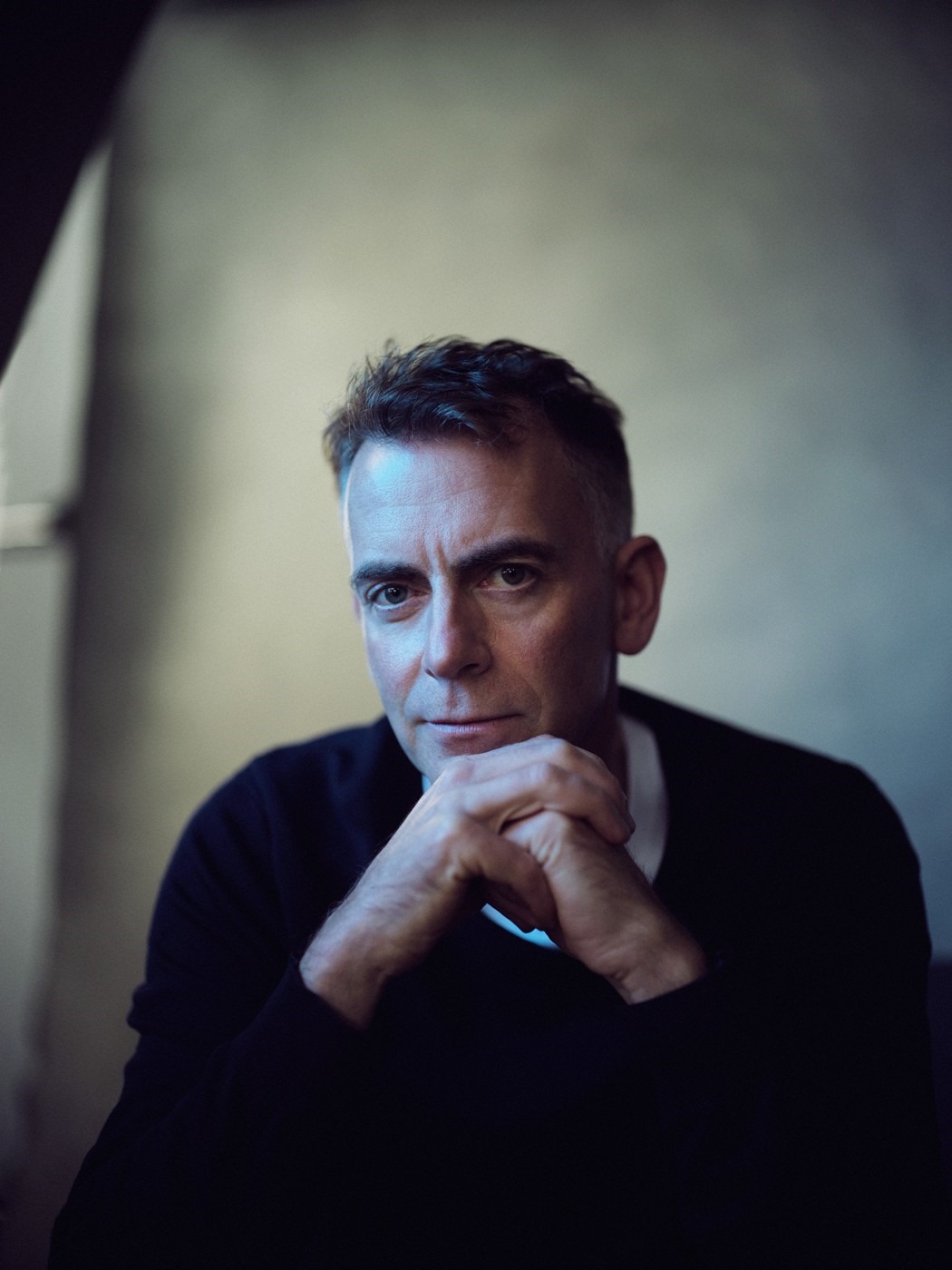
Sheridan Tongue is a BAFTA-nominated composer known for soundtracks including Silent Witness and Wonders of the Universe. A key figure of The Ivors Academy Media Council, Sheridan has spearheaded the End Ghostwriting campaign. We caught up with him to discuss his work on the Council and the importance of the campaign for the composing community.
When you first launched End Ghostwriting, what kind of reaction were you expecting, and how has the response compared?
I’ll admit that the night before the campaign launched, I was a little nervous. I’d been working on this for about six months with 11 other composers and one UK composer agent, so I knew the campaign was solid and carefully thought through…but there’s always that moment of uncertainty before something goes public. The launch completely exceeded my expectations.
I wasn’t prepared for the sheer volume of support or the overwhelmingly positive engagement from the composer community. It’s been incredible to see so many composers not only resonating with the issue but actively wanting to be part of ending it. The passion, honesty and solidarity that’s come out of this has been truly inspiring.
Why do you think End Ghostwriting struck such a chord with composers?
This issue has been bubbling under the surface for many years, yet no one has really done anything about it. Ghostwriting negatively affects composers at every stage of their careers—not just those doing the ghostwriting.
Composers working at the top end of film, television, and games are also losing out on opportunities that are being absorbed by lead composers who rely on ghostwriters. So, not only are these lead composers taking sustainable work away from additional writers, but they’re also reducing the number of genuine commissions available to others. I have spoken to a number of composers who work at the highest end of television who feel they are being negatively impacted by this. The issue is further compounded by the fact that there are simply fewer commissions available.
I’m not against lead composers collaborating with teams of writers…as long as those additional composers receive proper recognition for their work. That’s what this movement is really about: fairness, transparency, and respect for creative contribution.
Are production companies generally open to bringing an additional composer onto a project once the lead composer has already been commissioned?
While it isn’t our job to educate production companies, I do think it’s important they understand the implications of refusing additional support. When a production isn’t open to bringing on another composer as an Additional Writer, they increase the likelihood that a ghostwriter will be used…knowingly or not. And at that point, they become complicit in a practice that is fundamentally exploitative.
When a composer is commissioned for a new project, the musical direction is often not known or still evolving. At that early stage, it can be difficult for the lead composer to know whether they’ll need additional support — or even who the right person would be to bring on.
I can’t imagine that, in 2025, any production company, broadcaster, or streamer wants to be associated with exploiting members of their creative team. What’s needed is a willingness to allow lead composers to bring in additional writers when the workload demands it.
It is also in production’s best interest to contract all writing parties so that they are not at risk of litigation through uncleared music use.
Only recently, I heard of a production company that rejected the lead composer’s request to bring on another writer, even after deadlines shifted and it became clear the composer couldn’t meet the schedule alone. In that situation, collaborating with an additional writer wasn’t optional—it was the only ethical way forward.
My hope is that we see far more openness from production companies in the future when it comes to supporting composers with the resources they need.
What impact have you seen so far, and what has surprised you?
I’ve heard some truly heartening stories of great collaborations, and I’ve also heard from ghostwriters who are struggling to pay their bills while working on high-end television shows. That contrast has been one of the most striking things.
One composer told me that when they work as an additional writer for a lead composer, the lead composer splits the commissioning fee 50/50. They each take on half the composing, and every cue on the music cue sheet is also shared 50/50. Hearing examples like that is incredibly encouraging…it shows what fair, transparent collaboration can look like.
One of the hardest things that I hear quite frequently is that even though ghostwriters know the situation is wrong, many still feel that the lead composer is somehow “doing them a favour” by giving them the work. No — you are being exploited! There is a fairer, more transparent way for lead composers to collaborate, and that’s by bringing someone on as an Additional Composer, where you receive proper cue sheet credit and an on-screen or IMDb credit.
What would you say to composers if they get asked to become a ghostwriter on a production?
Funnily enough, someone asked me this exact question at a recent AWFC (Alliance for Women Film Composers) event in London, and at the time I didn’t have an answer. My answer now would be: tread carefully.
I genuinely believe it’s unsustainable to build a long-term career as a composer by ghostwriting for others. In my view, a media composer’s career rests on three pillars: commissioning fees, credits and royalties. As a ghostwriter, you lose two of those three … credits and royalties.
Credits are what allow us to gradually move up the ladder, taking on better and more visible projects. Royalties help smooth out the peaks and troughs of freelance income, and they give us the freedom to occasionally choose a passion project rather than only taking work for financial reasons.
What’s heartbreaking is hearing from ghostwriters whose work has contributed to productions that go on to be nominated for major UK awards, yet they can’t publicly acknowledge their involvement or use that success to secure new opportunities. And while the lead composer may receive royalties for 20 years on a successful series, the ghostwriter receives nothing … despite having meaningfully contributed to the score.
The campaign was developed by media composers with The Ivors Academy. Can you tell us how that collaboration worked in practice?
I knew from the start that if we were going to shift the dial on this issue, we needed the weight and credibility of The Ivors Academy behind the campaign. In early 2025, I shared my initial thoughts on how we might end ghostwriting in film, TV and games with Dru Masters, the Chair of the Media Council, over a cup of tea at Coal Drops Yard in King’s Cross. To Dru’s credit, he immediately embraced the idea and suggested we also develop a “Best Working Practice” document to ensure the campaign was not only corrective, but forward-facing.
I then invited 11 TV composers and one composer agent…composers I knew felt passionately about ending ghostwriting…to form a working group. Over the course of about six months, we examined every aspect of the issue: what is Ghostwriting, why ghostwriting emerges, how to prevent it, and how productions can properly bring additional composers on board. Whenever a topic needed deeper exploration, we scheduled a Zoom call and worked through it together.
As these discussions progressed, the path forward became increasingly clear to all of us. Eventually, we distilled our work into a three-page document and presented it to The Ivors Media Council for approval. That document became the foundation of the End Ghostwriting campaign.
What does being part of the Media Council mean to you personally, and how does it differ from simply being a member?
Being on the Media Council allows me to stay closely connected to the issues that impact composers’ lives…both the challenges and the positive developments. The Council’s voice is an important one within The Ivors Academy, as we represent all composers working across film, television and games.
Everyone on the Media Council is deeply passionate about music and about supporting composers at every stage of their careers. We’re equally focused on improving the broader working environment for media composers. It’s incredibly engaging and genuinely satisfying to be part of that group; I always leave our meetings feeling energised, informed and inspired to continue pushing for positive change.
And what’s next for the End Ghostwriting campaign?
As the campaign gains momentum and we have conversations with production companies, broadcasters, streamers and the major UK awards, I’m confident we’ll see a gradual cultural shift. The industry is becoming more aware of these issues, and I believe we’re moving toward working practices that are consistently fair, transparent and supportive of all composers.
One of the unexpected joys of this journey has been the warmth and solidarity within the working group: Anna Phoebe, Aisling Brouwer, Ben Foster, Daisy Coole, David Arnold, Jenna Fentimen, Jessica Jones, Nick Foster, Peter Gregson, Sam
Thompson, Sofia degli Alessandri-Hultquist and Tom Nettleship. Thank you everyone!
Whenever any of us needs help or guidance on a ghostwriting question, there’s a wealth of experience and generosity to draw on. We all feel deeply passionate about ending ghostwriting …and in many ways, the real work is only just beginning.