
This interview is part of an ongoing series profiling the members driving The Ivors Academy’s Councils – a unique part of our structure that puts creators at the heart of the organisation. These conversations offer insight into the voices shaping our work and championing your interests across the music industry.
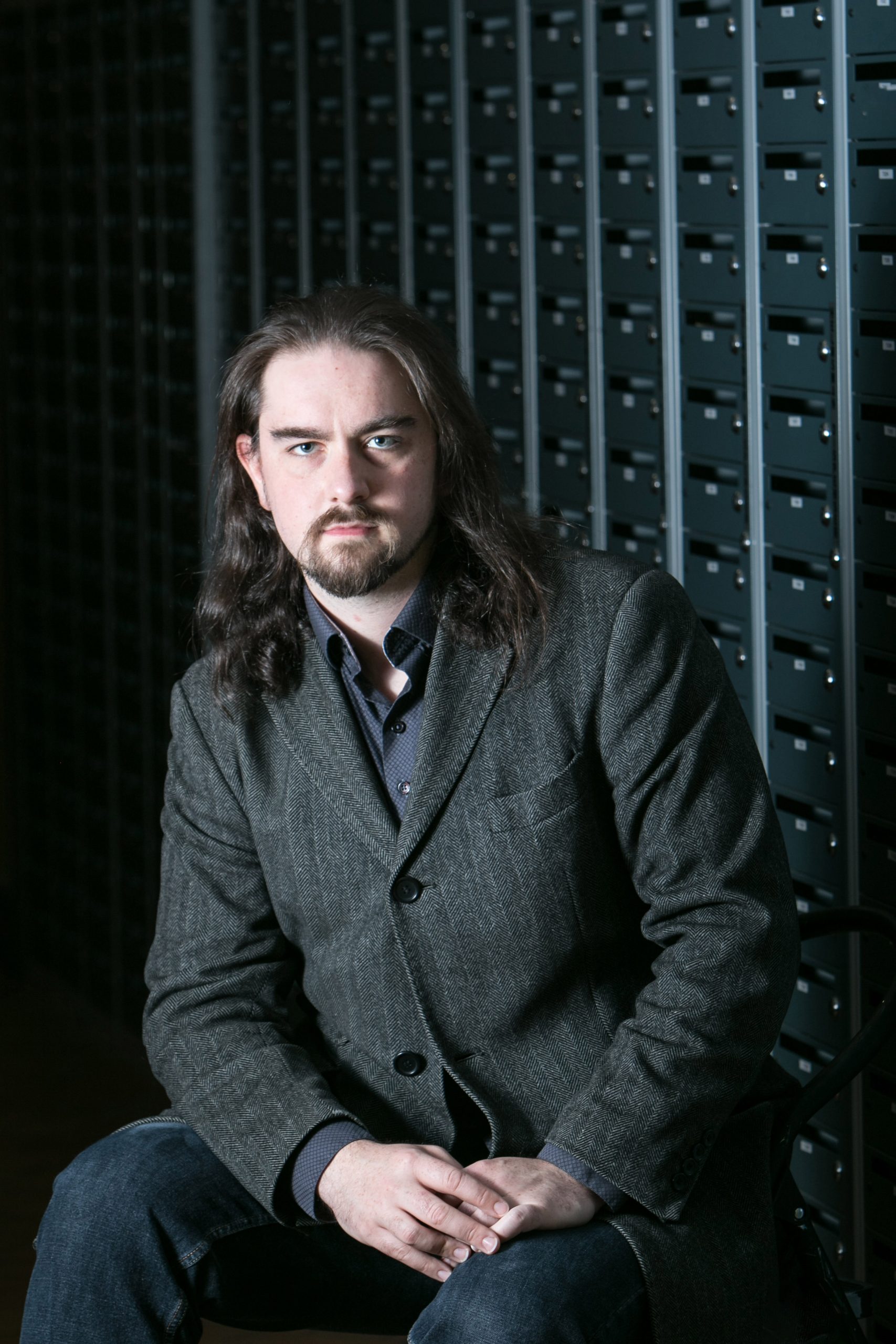
Matthew Whiteside is a composer, artistic director and sync agent based in Glasgow, named 'One to Watch' in the Herald's Culture Awards.
What would you say to someone considering joining The Ivors Academy?
Being part of a strong, informed community is one of the most powerful things you can do as a creator. The Ivors Academy supports its members in navigating and understanding the music industry, royalties, and income streams while lobbying for positive change. Joining The Ivors is a way to protect yourself, learn from peers, and be part of a collective voice advocating for fair treatment of creators. I’ve seen first-hand how a supportive network accelerates careers and protects creators join to learn, contribute and be represented where decisions are made. Something I care about deeply.
How did you land your first big opportunity in the music industry?
Looking back on my career so far it has largely always been by being in the right place at the right time or knowing the right people to pull together something at the right moment. For example, my first ‘proper’ commission was from Cottier Chamber Project. I’d known Andy Saunders, the Artistic Director, for a few years by just going to the same events and occasionally talking. I then got an out of the blue call from him asking if I wanted to write something for the festival. Also, I got the scoring job for Michael Palin’s Quest for Artemisia because the director was my neighbour and happened to start chatting when I moved in.
There is huge value in just showing up and being engaged. I think of it as being interested and interesting: be interested in what’s going on and be interesting to others in the work you are doing. I think serendipity opens the door but follow through and consistency builds a career.
What’s the best career advice you’ve received?
Never give up your rights.
When I was studying at Queen’s in Belfast, composer Neil Martin came to speak to our class. During a conversation afterwards he explained why you should never give up your rights without a meaningful upfront fee and the long-term value of protecting your rights.
That conversation started my understanding of the music business, led me to join PRS, and got me thinking about how to record and release my own music.
Years later, that one piece of advice still rings in my ears for many of my business decisions. It means I can respond to any sync call swiftly because I own both my compositions and most of my masters. I now pass that advice on to young composers regularly. That conversation shaped a lot of my thinking. Thinking that has gone into building my career as a composer and into my book The Guidebook to Self-Releasing Your Music
What’s a recent project you’re particularly proud of?
Emptiness for solo soprano and string orchestra written for Emily Thorner and United Strings of Europe. I say this because I think it is my best piece to date. It pulls together so many strands of what I am interested in and my style of writing into a complete and very powerful piece. It also had a really long gestation period.
I met Julian Azkoul, the artistic director of United Strings of Europe, while recording my second album Entangled in 2019 featuring three of my string quartets. After the recording sessions he suggested I write something for United Strings of Europe. A year later I met Emily Thorner through a mutual friend. There was something about her voice and her artistic interests that meant I knew I had to write her a piece. When I was pulling together plans for The Night With…’s first festival in 2023 I decided I would invite both Emily and United Strings of Europe and write a piece for them.
The piece itself is an existential piece touching on existence and climate change, but Emily feels it as a much more uplifting piece. That's what I love about art, the different ways something can be interpreted. Once an artist releases their work into the world they lose ownership of the interpretation. It is fascinating to me what different audience members hear in my music. (You can hear and see the score here)
The Night With… and the festival is something I am also massively proud of. This is a concert series I have grown over the last 10 years from being one concert pulled together in a basement in Glasgow to a multi-year funded organisation putting on around 20 concerts, commissioning 25 composers to date, and releasing around 2 albums a year. There will be another edition of the festival in 2027 which is in early planning stages at the moment.
If you could change one thing about the music industry, what would it be?
Move streaming away from the current pro-rata model to a user-centric payout. Listeners assume their subscription supports what they play; it rarely does.
The current pro-rata system disproportionately rewards already dominant catalogues because all the money flows to the already successful artists and righstholders. This is because you pay your money to the streaming service every month and they put all that subscription money into a pot that is then divided up by the number of streams in that time period (usually 28 days). So that means that if you as a listener only listen to one track in a month then most of your money goes to Taylor Swift or Ed Sheeran.
A fairer system is one of User-Centric where the subscription money is divided up by whatever the user listens to. This then means there is a real connection between what someone listens to and who they are supporting with their money and is the way most listeners assume the system works. It also supports niche and emerging artists with a dedicated fan base, reduces streaming fraud, and, most importantly for classical music, takes duration into account by the nature of time being a finite resource.
Through running The Night With…’s record label and from releasing my own work, I can see how this change would help the musical ecosystem and provide other income streams for composers. Unfortunately, a user-centric system doesn’t benefit the major record companies, so the lobbying efforts feel like they are falling on deaf ears.